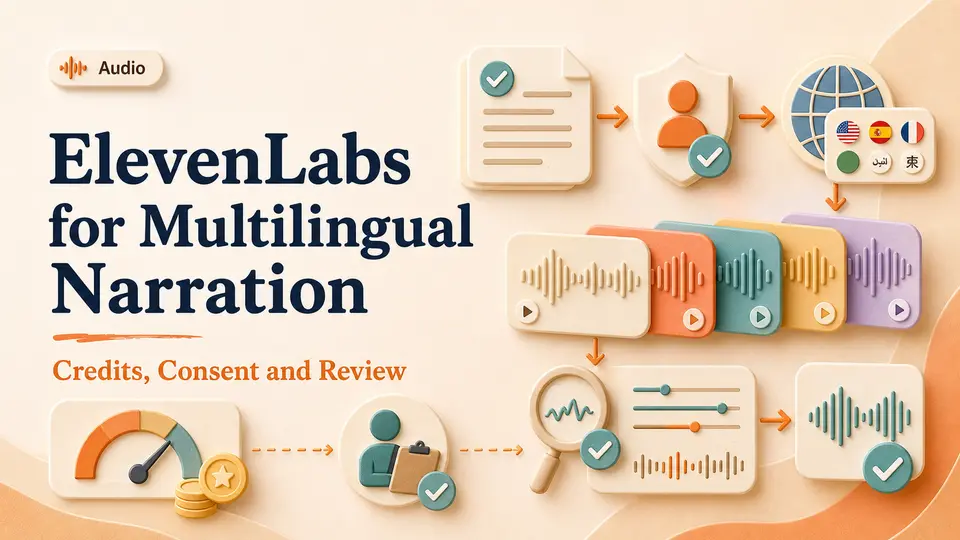
A training team needs a ten-minute course narrated in six languages. The source script changes twice, product names require pronunciation work, and the approved speaker has consented only to this program and its internal distribution. The credit estimate is no longer ten minutes of audio; it includes languages, alternate takes, corrections, dubbing choices, review, and the rules governing the voice itself.
ElevenLabs should be evaluated as both a production system and a sensitive-asset system. A plan may speed narration, localization, or other voice work, but the useful output is audio that passes performance, technical, consent, and rights review. Buyers need a workload estimate, an account that should own the voice assets, and a documented lifecycle for source recordings and generated material before comparing a marketplace offer.
The short answer
- Estimate credits from finished minutes, revisions, languages, and the features used.
- Voice cloning and generated speech require consent, rights, and disclosure review.
- Keep account, voice assets, source scripts, and billing under appropriate ownership.
Define the voice workflow and quality bar
ElevenLabs can support narration, localization, podcasts, character work, accessibility, and voice-enabled products. Start with the finished audio you need: length, languages, speaker style, pronunciation, delivery format, and distribution channel. A short internal prototype and a paid public campaign require different controls.
Test a representative script with names, numbers, abbreviations, emotion, and difficult pronunciations. Count reruns and manual edits. The useful result is not the first generated clip; it is approved audio that fits the performance, timing, rights, and technical requirements of the production.
Translate plan credits into finished output
ElevenLabs publishes multiple plans with different credit allowances and product access. Credits are shared across supported products, and consumption depends on the model or feature. Promotional first-month pricing is not the same as the normal recurring amount, so use the standard plan terms for a long-term budget.
Estimate characters or minutes, revisions, alternate takes, languages, and any dubbing or other features. Review the current pricing table at decision time. A plan with a large headline allowance can still be mismatched if your production repeatedly regenerates long passages.
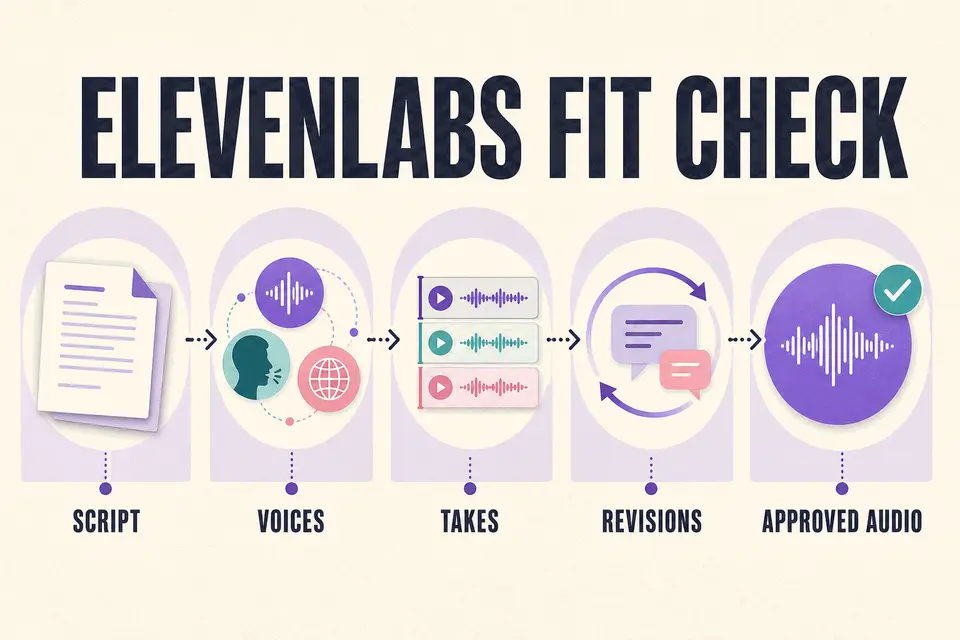
The useful result is not the first generated clip; it is approved audio that fits the performance, timing, rights, and technical requirements of the production.
Taploop decision principle
Estimate finished audio backward from approval
Start with the approved deliverable: minutes, languages, speakers, distribution channels, file formats, and deadline. Add script versions, pronunciation tests, alternate performances, pickups, localization review, and any dubbing or other supported feature. A short final file can generate many intermediate versions, so the estimate should count the complete production rather than multiplying a headline character allowance by one clean script.
Run a representative passage containing names, numbers, abbreviations, emotional changes, and difficult pronunciation. Record the model or feature, reruns, manual edits, and time spent by language reviewers or the consenting speaker. Compare the low, expected, and high-revision cases with ElevenLabs' current official plan documentation. Revisit the estimate when the script, number of markets, or required quality changes.
- Count every language, speaker, alternate take, and corrected passage.
- Separate generation from dubbing, cloning, sound, or other feature usage.
- Include human pronunciation, localization, rights, and final-mix review.
- Use the normal recurring plan terms rather than assuming an introductory promotion repeats.
Protect voice consent and asset ownership
Only create or use a cloned or designed voice when you have the required consent and rights. Document the speaker's permission, allowed uses, duration, territories, and withdrawal process where applicable. Never use a voice to impersonate a person or mislead an audience.
Choose an account that should control voice assets, scripts, generations, billing, and recovery. Teams should define access and deletion responsibilities. Review privacy, disclosure, and platform rules for the channel where the audio will appear.
- Obtain clear permission before creating a voice clone.
- Record where, how long, and for what purpose the voice may be used.
- Disclose synthetic audio when law, policy, or audience context requires it.
- Protect scripts and source recordings as sensitive production assets.
Govern the voice through its full lifecycle
Consent should identify the speaker, permitted uses, channels, territories, duration, and any review or withdrawal process appropriate to the project. Store the agreement with the source recording and production record. A person agreeing to narrate one course has not necessarily agreed to advertising, a new language, an interactive agent, or future scripts. Reconfirm permission when the scope changes.
Define who can create, edit, export, share, and delete the voice asset. Teams need an offboarding and incident process as well as a login. Keep source scripts and recordings protected, and disclose synthetic audio when law, platform policy, contract, or audience context requires it. If the buyer cannot document the right to create and use the voice, no subscription tier makes the workflow acceptable.
Compare the wider audio workflow and check the offer
Descript combines recording and editing with AI voice tools, while Runway is oriented toward visual generation and Claude Pro toward text and analysis. ElevenLabs is a focused choice when the voice output itself is the primary deliverable. Consider which other editor will handle timing, music, captions, mixing, and final export.
Before checking current ElevenLabs offer details, verify the exact tier, credits, voice features, account path, rights needs, term, region, renewal behavior, final total, and remedy information. Recheck allowances whenever the production volume changes.
The verdict
Verdict: valuable for recurring voice production with documented rights
ElevenLabs is easiest to justify when narration, localization, dubbing, or another voice workflow recurs and a representative project shows that the current plan supports its expected revisions. It is not a responsible purchase when consent is vague, account ownership is improvised, or the team has no process for reviewing and retiring voice assets. Rights and governance are part of production capacity, not paperwork added afterward.
If the workflow and consent model are sound, verify the current provider tier and allowance, then inspect the live Taploop offer. Confirm the exact plan, voice features, account path, term, region, renewal behavior, final total, access method, and remedy terms. Do not treat a first-month promotion as a recurring price, or infer authorization, a fixed number of finished minutes, instant delivery, or current availability from the product name.
Product guide
Need the complete ElevenLabs guide?
Review product capabilities, platforms, official sources, and the current Taploop buying path in one place.
Compare before you choose
These comparison and category pages help you review nearby products and tradeoffs before choosing.
Continue with a related workflow
These nearby articles cover other practical questions about elevenlabs multilingual narration workflow that you may want to explore next.

Ready to review ElevenLabs?
Check the product page for the currently published plan, term, account, region, renewal, price, and remedy details. Purchase controls appear only when the required offer data and inventory are present.
Frequently asked questions
How should I estimate ElevenLabs credits?
Include script length, languages, speakers, revisions, alternate takes, pickups, chosen models, and every product feature used. Test a representative passage and build low, expected, and high-revision cases. Review current provider documentation because consumption and plan allowances can change by model or feature.
Can I clone any person's voice?
No. You need the required consent and rights, and the resulting use must comply with current law, contract, provider policy, and destination-platform rules. Permission should cover the actual purpose and duration. Do not imitate a person or expand a licensed voice into a new use without appropriate authorization.
Is promotional first-month pricing the recurring price?
Do not assume that it is. Review ElevenLabs' current pricing page for the standard recurring amount, billing cadence, and any introductory conditions on the decision date. Build the ongoing production budget from the normal terms unless the provider explicitly states that a promotion continues.
Who should own a created voice and its source recordings?
The responsible person or organization should control the account, consent record, source files, voice asset, scripts, billing, access, and deletion process. Document client or speaker rights separately from technical account access. Plan how the asset will be handed over or retired before production begins.
What should a Taploop ElevenLabs offer specify?
It should identify the current tier, credits or allowance, included voice features, account and access path, term, region, renewal treatment, final total, and remedy terms. Purchase controls should appear only when required offer data and inventory are present. Creator Plan wording alone is not enough.
Official sources reviewed
Product plans change. These provider sources were checked on July 18, 2026; review them again when you make a purchase decision.