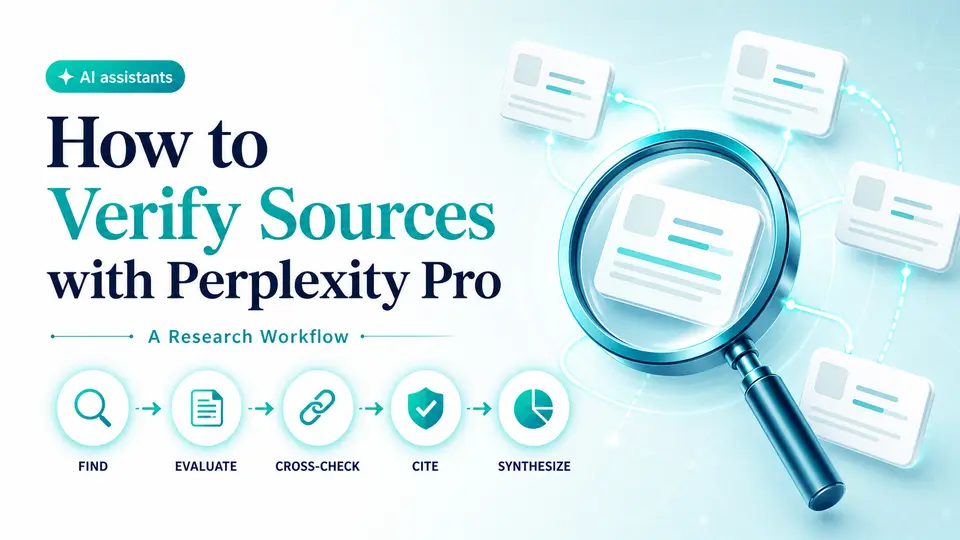
A market researcher asks for the latest rule affecting a Canadian product launch and receives a crisp answer with several citations. The first link is current, the second discusses another jurisdiction, and the third is a news summary that does not support the precise claim beside it. The answer is a useful map, but it is not yet evidence a team should act on.
Perplexity Pro is best evaluated inside that gap between discovery and conclusion. It can make source-led research faster, especially when current web material is central, but visible links do not remove the need to inspect dates, methods, jurisdictions, and contradictory evidence. A buyer should measure whether the plan shortens a reproducible research process while preserving the judgment that makes the final work trustworthy.
The short answer
- Judge the plan by how well it improves a repeatable research process.
- A citation is a route to evidence, not proof that the answer interpreted it correctly.
- Confirm allowances, account ownership, and offer terms at the time of purchase.
Define the research job you are buying for
Perplexity Pro is designed around question answering with links to web sources. It is a stronger candidate when your recurring work begins with finding current material, mapping a topic, comparing claims, or assembling a source trail. It is a weaker reason to subscribe if you mainly need offline drafting or rarely open the cited pages.
Choose three real questions from your work and specify the geography, date range, and evidence standard for each. Evaluate whether the result finds useful primary sources, represents them accurately, and lets you reach a defensible conclusion faster. This turns a generic Perplexity Pro review into a decision tied to your needs.
Build source checking into the workflow
Citations improve traceability, but they can still be outdated, irrelevant, or interpreted incorrectly. Open the most important sources. Check the publication date, author, methodology, jurisdiction, and whether the cited passage actually supports the sentence beside it.
For commercial, medical, legal, or financial decisions, prioritize original documentation and qualified advice. Save the links used for the final conclusion so another person can reproduce the research. The plan's value comes from accelerating this process, not eliminating it.
- Ask for primary sources and a clear date cutoff.
- Separate sourced facts from the system's inference.
- Look for missing perspectives and contradictory evidence.
- Re-run time-sensitive research when the decision date changes.
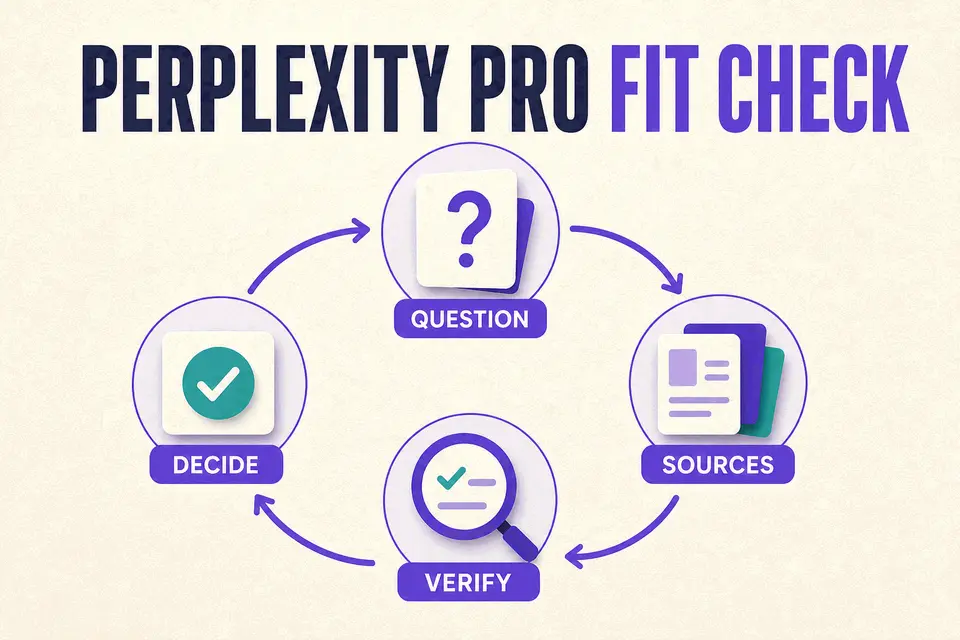
A citation is a route to evidence, not proof that the answer interpreted it correctly.
Taploop decision principle
Work one claim from generated answer to primary evidence
Use a question from a real decision and write down what would make the answer current and applicable: a date cutoff, geography, population, product version, or legal jurisdiction. Ask for primary sources, then open the strongest source and find the exact passage, table, or methodology behind the claim. Record whether the generated wording is directly supported, inferred, or contradicted.
Next, search for evidence the first answer may have missed. Look for a regulator, standards body, provider documentation, original study, or official dataset, depending on the topic. Compare publication dates and definitions. A useful Pro workflow should help you reach this reviewable evidence faster, not encourage you to stop at the summary. Save the final source set so a colleague can reproduce the result without relying on the conversation history.
- Define the decision date, geography, and evidence threshold before searching.
- Label every important statement as sourced fact, inference, or unresolved question.
- Open the primary material and verify the exact supporting passage.
- Search deliberately for newer, conflicting, or excluded evidence.
Review the plan limits and account requirements
Perplexity controls the available models, research modes, file features, and usage allowances. Review the official Pro page immediately before choosing. Focus on the feature you expect to use, not the longest list of capabilities, and assume limits or interfaces can evolve.
Confirm the email that should own the research history, any workspace requirements, and the Taploop offer's access method. Also check duration, region, renewal, and remedy fields. If the marketplace page does not publish an essential fact, wait rather than assuming the entitlement will attach to your preferred account.
Protect sensitive inputs and the research record
Research often begins with internal notes, customer material, unpublished strategy, or licensed reports. Decide what may be entered before testing file or workspace features. Follow your organization's current policy and the provider's published controls; remove unnecessary personal or confidential details when a public-source question can be answered without them.
Choose an account that should retain saved threads, uploaded files, collections, and billing history. For team work, document the final sources and conclusion outside a personal chat so the reasoning survives an account change. The research record should distinguish what Perplexity found from what the human reviewer accepted, rejected, or left unresolved. That separation is especially important when the answer informs a commercial or regulated decision.
Compare the adjacent tools before checking an offer
ChatGPT Plus and Claude Pro are broader assistants that can also support research. Perplexity Pro may fit better when web discovery and visible source links are central. Your final choice should reflect the complete workflow: discovery, reading, synthesis, drafting, and verification.
Before checking current Perplexity Pro offer details, verify the plan name, account path, represented term, final total, provider requirements, region, renewal behavior, and what the order promises if access is unusable. Keep the research product and the marketplace offer as two separate things to evaluate.
The verdict
Verdict: valuable when source discovery is the recurring bottleneck
Perplexity Pro is a strong candidate for researchers, analysts, writers, and other knowledge workers who repeatedly need current web sources and will open the evidence before using it. It is a weaker purchase for someone who mainly drafts from material already in hand or expects a cited answer to replace expert review. The test is whether it reduces the time from question to reproducible conclusion without lowering the evidence standard.
If it passes that test, review the current provider plan and keep the marketplace offer separate from the research product. Confirm the plan, account path, represented term, region, renewal behavior, final total, provider requirements, and remedy terms on the live Taploop page. Missing access or account facts are a reason to pause, not permission to assume that the entitlement will attach to the account you prefer.
Product guide
Need the complete Perplexity Pro guide?
Review product capabilities, platforms, official sources, and the current Taploop buying path in one place.
Compare before you choose
These comparison and category pages help you review nearby products and tradeoffs before choosing.
Continue with a related workflow
These nearby articles cover other practical questions about perplexity pro source verification workflow that you may want to explore next.

Ready to review Perplexity Pro?
Check the product page for the currently published plan, term, account, region, renewal, price, and remedy details. Purchase controls appear only when the required offer data and inventory are present.
Frequently asked questions
Is Perplexity Pro a replacement for checking sources?
No. It can help find and organize sources, but the reader still needs to inspect the original evidence and its context. Check dates, jurisdiction, definitions, methodology, and the exact passage supporting a material claim. For high-stakes decisions, use appropriate primary documentation and qualified professional review.
Which questions should I test before subscribing?
Use current, source-heavy questions from your actual work. Include one straightforward discovery task, one question with conflicting evidence, and one where jurisdiction or date changes the answer. Measure source relevance, accuracy, missing perspectives, verification time, and whether another person can reproduce the final conclusion.
How should I compare free access with Perplexity Pro?
Run the same evaluation set on the access you currently have and note which documented Pro capabilities or limits materially affect the workflow. Focus on sources opened and conclusions verified, not the number of features listed. Review the official plan again when deciding because models, allowances, and interfaces can change.
Should I upload internal research or customer files?
Only when the material's use is authorized and the provider's current controls satisfy your organization. Prefer the minimum necessary context, remove irrelevant personal data, and keep the approved evidence record outside a personal conversation. When policy is unclear, test with public or synthetic material instead.
What should a Perplexity Pro offer specify?
Look for the exact plan, term, account and access path, region, renewal treatment, provider requirements, final total, and remedy terms. The buying guide does not prove live inventory. Purchase controls should appear only when the product page has the required offer data and an eligible published offer.
Official sources reviewed
Product plans change. These provider sources were checked on July 18, 2026; review them again when you make a purchase decision.